
Build skills that show up in the work.
Equip leaders and teams with practical tools, exercises and repeatable ways of working.
Discussthis priority↗
01
Role-relevant workshop and bootcamp programmes
Focus learning on role-specific tasks and capability gaps.
02
Practical exercises, playbooks and toolkits
Give participants exercises and tools tied to their work.
03
An adoption and reinforcement plan
Support managers with reinforcement and adoption routines.
MAKE THE WORK VISIBLE
Learning should change the work.
Start with the task people need to perform, then build practice and reinforcement around it.
Role-specific tasks + skill gaps
Realistic scenarios + useful tools
Manager expectations + working standards
→
Practice. Feedback. Application.
A usable capability
Exercises, templates and role-specific ways of working.
A reinforced habit
Manager follow-up, review routines and clear application goals.
↶ Observe application in real work and adapt the next learning session.
THE WORK / THE OUTPUTS
Build capability that shows up in the work.
Training is most useful when people can apply it to a real responsibility. We design practical sessions, exercises and working tools around the roles, decisions and systems your teams use, with reinforcement that supports adoption.
Illustrative visual. Not a client project.
Discuss this priority ↗01
Leadership & management capability
Help managers run clearer conversations, make decisions and translate priorities into team action. Programmes are shaped around the operating context and can cover goal setting, performance discussions, delegation and change leadership. Real scenarios and reusable tools make the sessions relevant to the work managers face after the workshop.
What you can put to work: Learning objectives · Role-based scenarios · Manager tools · Application plan
02
Sales & go-to-market enablement
Equip commercial teams to use the playbooks and processes the business has chosen. Sessions can cover discovery, qualification, value articulation, objection handling, proposals and account planning. Practice and feedback are connected to your offer and buying cycle so the learning supports a consistent customer conversation.
What you can put to work: Sales workshops · Conversation exercises · Playbook walkthroughs · Coaching prompts
03
Marketing & platform skills
Develop the practical capability behind campaign planning, content, measurement and the marketing stack. We organise learning around the team's responsibilities and agreed tools, using examples and exercises that connect platform actions to business goals. The emphasis is on understanding why a task matters as well as how to complete it.
What you can put to work: Role-based curriculum · Campaign exercises · Working templates · Skills application checklist
04
AI literacy & responsible adoption
Help teams recognise useful AI applications and understand the limits of the tools they use. Sessions cover workflow selection, information boundaries, output review and practical use cases relevant to each role. Exercises reinforce human accountability and evaluation rather than treating generated output as automatically correct.
What you can put to work: AI literacy sessions · Workflow exercises · Review criteria · Acceptable-use guidance
Explore AI literacy training ↗05
Finance, ESG & governance awareness
Build a shared understanding of the processes and responsibilities behind specialist programmes. Training can support financial management literacy, sustainability initiatives, data governance and security awareness, with content aligned to the organisation’s policies and specialist guidance. The goal is confident participation and appropriate escalation.
What you can put to work: Awareness modules · Role responsibilities · Practical scenarios · Reference materials
06
Learning design & reinforcement
Make the programme part of a broader adoption plan. We clarify learning needs, choose suitable formats and define how managers will support application. Follow-up exercises, job aids and review points help distinguish attendance from the practical changes the organisation intended to achieve.
What you can put to work: Needs assessment · Learning pathway · Job aids · Reinforcement and evaluation plan
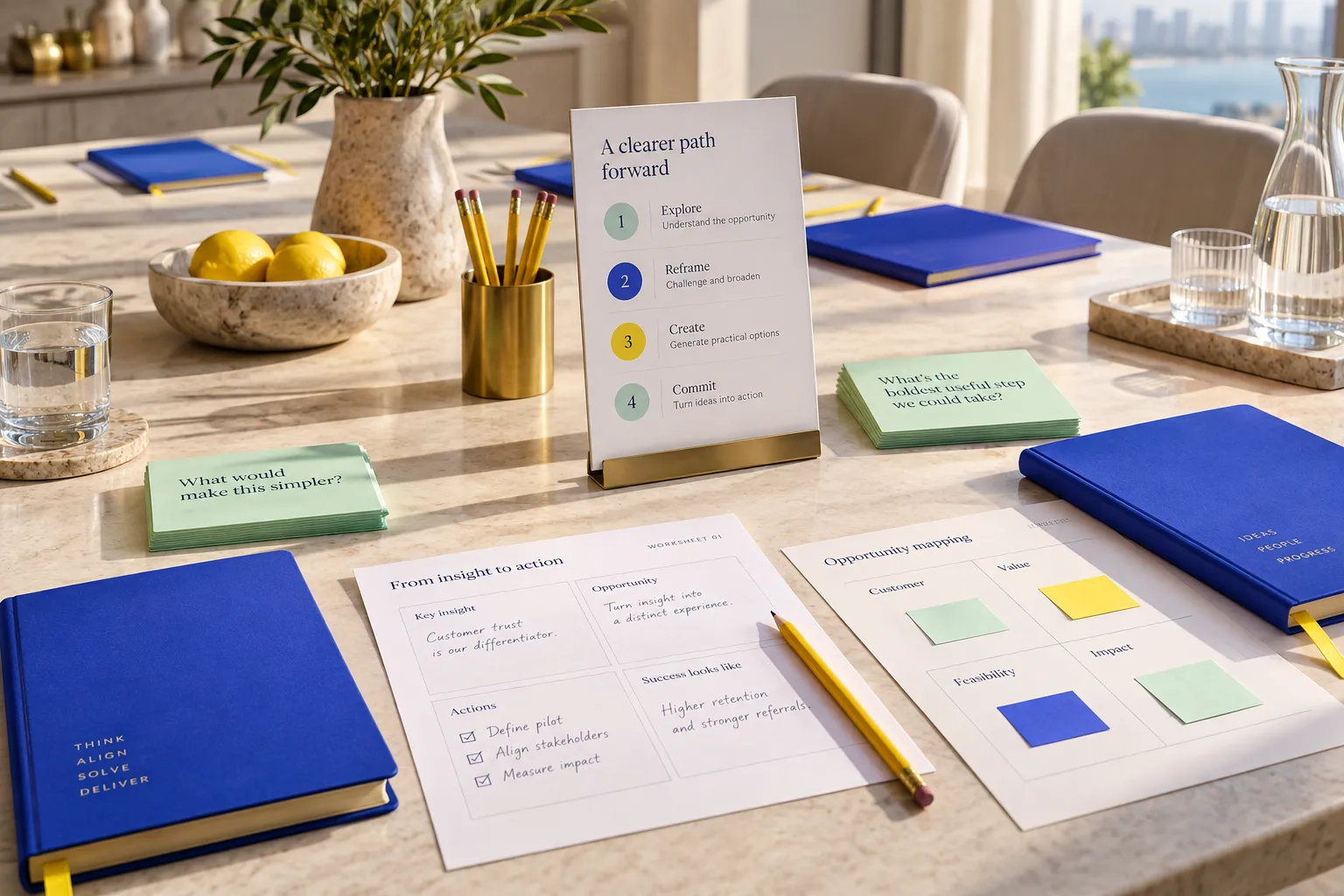
01 / →
Focus
Role-specific tasks and learning needs
02 / →
Practise
Realistic exercises and feedback
03 / ↗
Apply
Tools, reinforcement and manager follow-up
HOW WE MAKE THE WORK ACCOUNTABLE
Training that carries through into the work.
A credible learning programme starts with what people need to do differently. Connect instruction, practice and follow-up to the tasks that matter.
01 / INSIDE THE WORK
A learning need tied to a role
Identify the work, current skill gaps and expected standard. Adapt examples and learning paths to the participants and their responsibilities.
Working outputs: needs assessment, role-based objectives and curriculum.
02 / INSIDE THE WORK
Practice with useful feedback
Use realistic exercises, tools and scenarios. Let participants apply a method, receive feedback and understand how to recognise a weak result.
Working outputs: workshops, exercise materials, templates and practical feedback.
03 / INSIDE THE WORK
Reinforcement after the session
Agree how managers and teams will support application. Define opportunities to practise and review where additional support is needed.
Working outputs: application plan, manager prompts, reference materials and follow-up review structure.
THE REVIEW FRAMEWORK
Evidence → decision → next action
Relevance
What task should improve?
↗ Set the learning objective
Practice
Can participants apply the method?
↗ Give focused feedback
Transfer
Is the learning used in daily work?
↗ Reinforce and adapt support
The scope defines the outputs, acceptance criteria, review points and handover. We agree these around your priority and existing capabilities.
Discuss your training & capability building priority ↗DECIDE WITH CONFIDENCE
A useful first conversation. A clear next step.
Where should we start?
Start when people need confidence with new tools or responsibilities; a strategy or system needs stronger adoption; training needs to connect to real business situations. We use the first conversation to separate symptoms from the priority worth addressing.
Can we work with your existing team?
Yes. We define what your team owns, what Aurlume delivers and where specialist input is needed. The engagement can focus on diagnosis, implementation or both, with shared review points and usable documentation.
What does a successful handover include?
The agreed outputs, the assumptions behind them, named internal owners and guidance for day-to-day use. We set acceptance criteria during scoping and identify what needs ongoing review rather than treating delivery as the end of adoption.
How are fees and timelines agreed?
Fees and timelines depend on scope, available information, implementation complexity and the level of ongoing support. A focused project, fractional leadership or an Execution Studio can be considered after the priority and responsibilities are clear.
Dubai-based. Working with UAE and GCC businesses. Reply within 2 business days. NDA available on request.
CONNECTED EXPERTISE
Keep the whole business in view.
Bring the relevant expertise together.
A growth decision can affect finance, operations, people and technology. Explore the wider services that support implementation.
Explore Aurlume services ↗Choose the right way to work.
Use a focused project for a defined deliverable, fractional leadership for a sustained remit, or an Execution Studio for recurring specialist work.
Explore engagement options ↗Your next chapter starts with a conversation
Let’s makewhat’s nexthappen.
Request a 20-minute discovery call. No pitch.We reply within 2 business days. NDA available on request.