
Turn good intentions into meaningful action.
Build sustainability and CSR programmes with clear priorities, practical ownership and useful measurement.
Discussthis priority↗
01
An ESG and sustainability roadmap
Focus effort on relevant sustainability and stakeholder priorities.
02
Reporting structures and supplier frameworks
Build repeatable collection and review of reporting inputs.
03
CSR programmes and impact measurement plans
Design CSR programmes with defined partners, participation and impact measures.
MAKE THE WORK VISIBLE
Make sustainability traceable to evidence.
Move from an ambition to a programme the business can maintain and explain.
Material issues + stakeholder needs
Operating boundaries + source records
Supplier information + internal owners
→
A practical ESG programme.
Evidence that can be traced
Indicators, collection workflows, checks and reporting structure.
Work that can be owned
Prioritised initiatives, responsibilities and a review calendar.
↶ Reporting identifies gaps in the evidence and opportunities to improve the programme.
THE WORK / THE OUTPUTS
Turn sustainability ambition into an operating plan.
ESG work becomes credible when priorities, evidence and responsibilities are clear. We help organisations understand the relevant issues, organise data and build practical programmes that can be managed and explained.
Illustrative visual. Not a client project.
Discuss this priority ↗01
ESG priorities & materiality
Identify the environmental, social and governance topics that matter to your business and stakeholders. We organise the assessment around the operating context, stakeholder expectations and existing evidence, then turn the findings into priorities. The output gives leadership a basis for decisions rather than a broad commitment to improve everything at once.
What you can put to work: Issue assessment · Stakeholder inputs · Priority map · Leadership decision brief
02
Climate data & reporting readiness
Establish a clearer process for collecting and managing the information needed for climate-related reporting. We map sources, boundaries, assumptions and ownership, then identify gaps and improvement actions. Any methodology, assurance or jurisdiction-specific requirement is defined in the engagement with the relevant specialist input.
What you can put to work: Data inventory · Collection templates · Responsibility map · Reporting-readiness plan
Explore ESG reporting readiness ↗03
Sustainability roadmap & governance
Translate priorities into initiatives that fit the organisation’s capabilities and resources. We define owners, milestones, measurement and reporting routines, and connect the roadmap to operational decisions. Leadership can review progress, address dependencies and revise the plan as better evidence becomes available.
What you can put to work: Initiative roadmap · Governance structure · KPI framework · Progress-review cadence
04
Supplier & operational programmes
Bring sustainability expectations into procurement and everyday operations. We help develop supplier guidance, assessment structures and practical improvement plans, with an emphasis on information the business can collect and use. The work connects policy intent with the people who select suppliers, manage relationships and deliver services.
What you can put to work: Supplier code framework · Assessment questions · Operational action plan · Monitoring process
05
CSR, volunteering & community impact
Design programmes with a clear purpose, appropriate partners and a workable delivery model. We help define objectives, employee participation, programme activities and the evidence needed to understand the contribution. Reporting distinguishes activity from outcomes and avoids claiming impact that has not been demonstrated.
What you can put to work: Programme concept · Partner criteria · Participation plan · Measurement and reporting framework
06
Communication & team capability
Help teams understand what the programme requires and help external audiences understand what has actually been done. We support internal training, leadership narratives and reporting structures grounded in documented activity. Claims, boundaries and outstanding gaps are made explicit so communication supports credibility.
What you can put to work: Team workshops · Leadership narrative · Evidence checklist · Reporting content structure
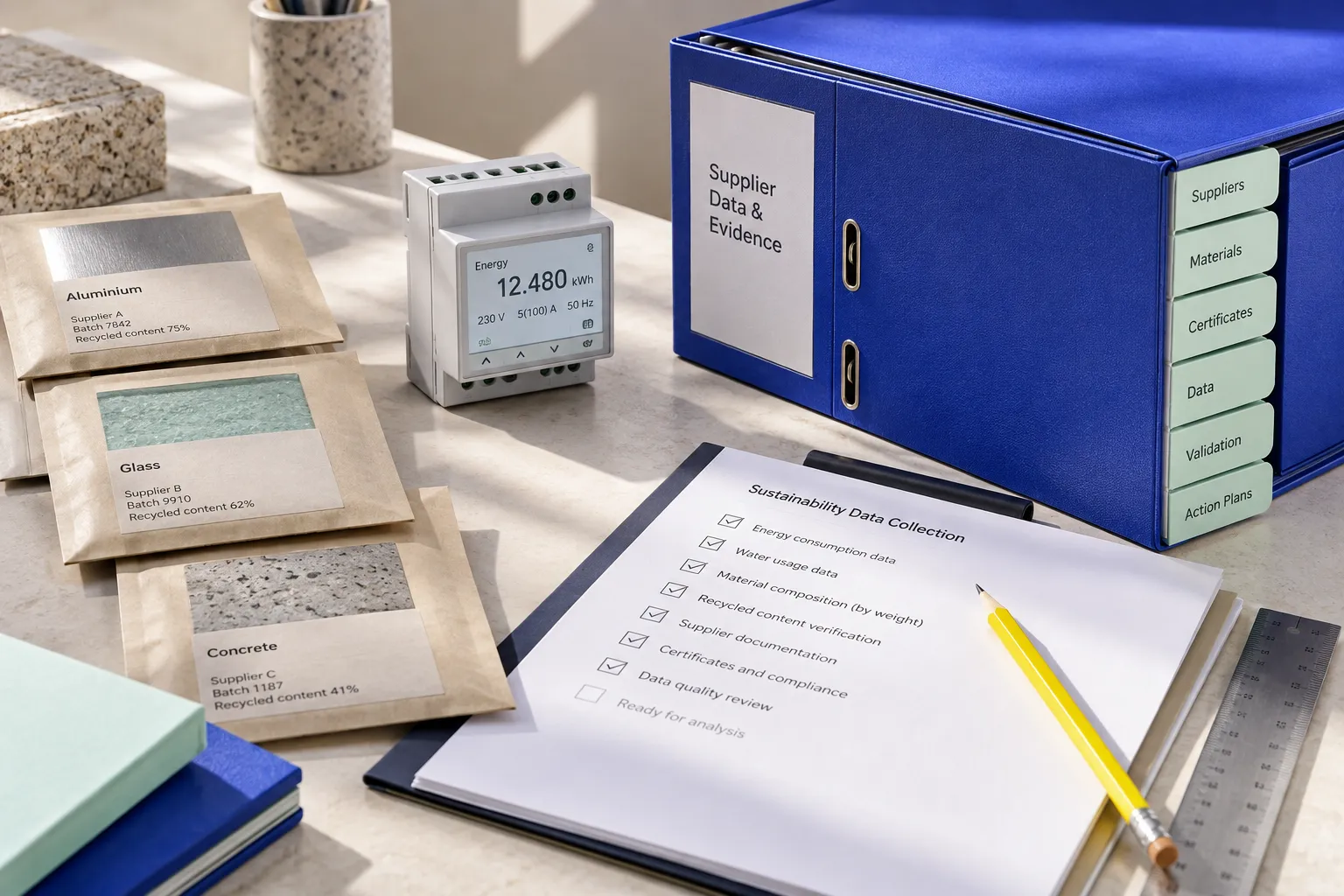
01 / →
Prioritise
Relevant issues and stakeholders
02 / →
Evidence
Boundaries, indicators and data owners
03 / ↗
Implement
Programme actions and progress review
HOW WE MAKE THE WORK ACCOUNTABLE
Build sustainability claims on evidence the business can maintain.
A useful programme connects priorities, ownership and information. Reporting should make its boundaries and evidence visible, with a manageable path to improvement.
01 / INSIDE THE WORK
Priorities grounded in the business
Consider stakeholders, operations, value chain and the issues relevant to the organisation. Separate a meaningful priority from a generic initiative list.
Working outputs: stakeholder map, issue assessment, programme priorities and policy requirements.
02 / INSIDE THE WORK
Data with boundaries and owners
Define indicators, organisational boundaries, sources and collection responsibilities. Record gaps and calculation assumptions rather than hiding uncertainty.
Working outputs: indicator catalogue, data collection plan, evidence register and review workflow.
03 / INSIDE THE WORK
A programme with follow-through
Translate priorities into initiatives, responsibilities and a review cadence. Connect CSR activities and partner selection to the intended impact and available evidence.
Working outputs: implementation roadmap, partner criteria, reporting structure and impact measures.
THE REVIEW FRAMEWORK
Evidence → decision → next action
Relevance
Why does this issue matter here?
↗ Agree the programme priority
Evidence
What supports the reported information?
↗ Close the data gap
Progress
Is the initiative producing its intended change?
↗ Review the action and measure
The scope defines the outputs, acceptance criteria, review points and handover. We agree these around your priority and existing capabilities.
Discuss your sustainability, esg & climate / csr programmes priority ↗DECIDE WITH CONFIDENCE
A useful first conversation. A clear next step.
Where should we start?
Start when sustainability priorities are difficult to translate into action; eSG data and reporting are fragmented; cSR activities need a coherent purpose and plan. We use the first conversation to separate symptoms from the priority worth addressing.
Can we work with your existing team?
Yes. We define what your team owns, what Aurlume delivers and where specialist input is needed. The engagement can focus on diagnosis, implementation or both, with shared review points and usable documentation.
What does a successful handover include?
The agreed outputs, the assumptions behind them, named internal owners and guidance for day-to-day use. We set acceptance criteria during scoping and identify what needs ongoing review rather than treating delivery as the end of adoption.
How are fees and timelines agreed?
Fees and timelines depend on scope, available information, implementation complexity and the level of ongoing support. A focused project, fractional leadership or an Execution Studio can be considered after the priority and responsibilities are clear.
Dubai-based. Working with UAE and GCC businesses. Reply within 2 business days. NDA available on request.
CONNECTED EXPERTISE
Keep the whole business in view.
Bring the relevant expertise together.
A growth decision can affect finance, operations, people and technology. Explore the wider services that support implementation.
Explore Aurlume services ↗Choose the right way to work.
Use a focused project for a defined deliverable, fractional leadership for a sustained remit, or an Execution Studio for recurring specialist work.
Explore engagement options ↗Your next chapter starts with a conversation
Let’s makewhat’s nexthappen.
Request a 20-minute discovery call. No pitch.We reply within 2 business days. NDA available on request.