
A data-driven framework for allocating limited marketing budgets between organic growth and paid acquisition in the UAE's competitive digital landscape
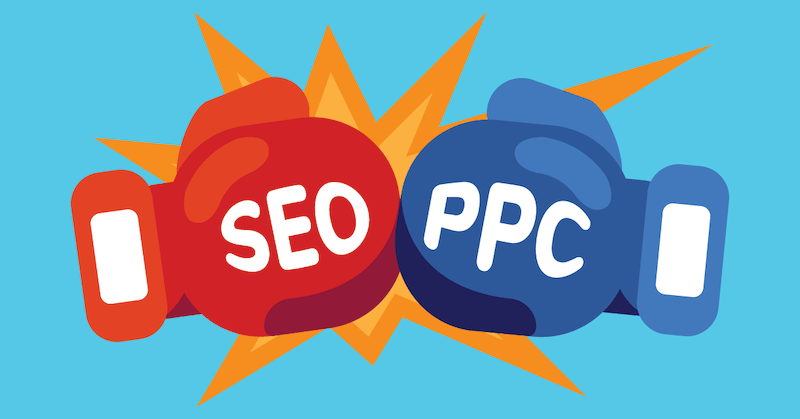
Dubai's SME landscape faces a unique digital marketing paradox: the highest cost-per-click rates in the MENA region coupled with the most discerning, mobile-first consumers. With average CPCs for B2B services ranging from AED 15-45 and prime SEO keywords dominated by government entities and multinational giants, small and medium businesses cannot afford to guess where to invest.
The wrong allocation burns cash without conversion. The right allocation builds sustainable competitive advantage. This decision requires understanding not just marketing mechanics, but Dubai's specific digital behaviors: high smartphone penetration, multilingual search patterns, and trust signals that differ significantly from Western markets.
In Dubai's high-cost digital environment, SMBs must treat marketing spend as capital allocation, not operational expense. Every dirham must either build a long-term asset or generate immediate, measurable revenue.
Before choosing channels, understand how each performs in the Dubai context specifically:
| Factor | SEO in Dubai | Paid Ads in Dubai |
|---|---|---|
| Time to Results | 6-12 months for competitive keywords. Local SEO (Google Business Profile) can show results in 30-60 days. | Immediate visibility, but 2-3 weeks needed for algorithm optimization and cost stabilization. |
| Cost Dynamics | High upfront content investment (AED 8K-15K monthly), declining marginal cost over time. | Linear scaling: AED 5K-20K monthly minimum for B2B, perpetual payment required. |
| Trust Signal | Higher credibility with UAE consumers who trust organic rankings over "sponsored" labels. | Effective for immediate needs, but ad fatigue is high in Dubai's saturated market. |
| Competition | Extreme for English keywords; moderate for Arabic and "near me" local searches. | Fierce in real estate, finance, and hospitality. Quality scores critical due to high CPCs. |
Rather than asking which channel is "better," ask which aligns with your cash flow and growth stage:
With limited runway, you cannot wait 6 months for SEO. Focus 80% budget on highly targeted LinkedIn and Google Ads to validate product-market fit and generate immediate pipeline.
Balance 60% paid for pipeline maintenance with 40% SEO investment. Target long-tail Arabic keywords and local SEO while scaling proven ad campaigns.
Shift to 70% SEO/content marketing to reduce CAC over time. Use paid ads only for new service launches and retargeting existing traffic.
The Cash Flow Rule: If you have less than 6 months of operating capital, prioritize paid ads for survival. If you have 12+ months of runway, invest heavily in SEO to reduce future dependency on paid acquisition.
Global best practices fail here without localization. Three factors specific to the UAE market should influence your allocation:
Multilingual Complexity: Dubai searches happen in English, Arabic, and Romanized Arabic (Arabizi). SEO requires bilingual content strategy; paid ads need language-specific landing pages. Budget 30% more for bilingual campaign management.
Mobile-First Reality: 85% of Dubai searches occur on mobile devices. SEO must prioritize page speed (3G/4G networks still prevalent in older areas) and mobile UX. Paid ads require call-only campaigns and WhatsApp click-to-chat, not just web forms.
High-Intent Browsing: Dubai consumers research extensively before contacting businesses. SEO captures this research phase; paid ads capture the decision phase. SMBs need both: SEO for "best [service] in Dubai" and paid ads for "[service] near me open now."
Dubai's marketing landscape is littered with failed campaigns that ignored local realities:
Bidding on "consulting Dubai" or "real estate" drains budgets immediately. The CPC is astronomical and traffic is unqualified. Target micro-intent keywords instead.
The highest-ROI SEO activity in Dubai is free: optimizing your GBP for "near me" searches. Yet 60% of SMBs have incomplete profiles with no Arabic descriptions.
Literal Arabic translations of English ad copy destroy credibility. "Cost-effective" directly translated implies "cheap quality" in Gulf Arabic. Hire native copywriters.
With high CPCs, failing to retarget website visitors is criminal. Dubai's long consideration cycles require 7-12 touchpoints. Build retargeting audiences immediately.
For most Dubai SMBs, the answer is not either/or, but sequenced integration:
Audit and fix technical SEO issues (site speed, mobile UX, schema markup). Launch Google Business Profile optimization. Simultaneously run highly targeted Google Ads with exact match keywords only, capped at AED 200/day budget.
Publish 4 high-quality blog posts targeting "Dubai + [service]" long-tail keywords. Expand ads to LinkedIn for B2B if initial Google ROAS exceeds 3:1. Implement retargeting pixels and build lookalike audiences.
Calculate blended CAC from both channels. If SEO traffic converts at half the rate of paid but costs 70% less, shift 20% of paid budget to content. If paid dominates, maintain SEO as insurance while scaling ads.
Vanity metrics kill Dubai marketing budgets. Track these specific KPIs:
For Paid Ads: Cost per qualified lead (not click), not just CPC. With Dubai's high CPCs, a AED 50 click that converts at 20% beats a AED 5 click that converts at 1%. Track "view-through conversions"—Dubai's research-heavy consumers often see ads then search organically later.
For SEO: Local pack rankings (positions 1-3 in map results) often drive more calls than position #1 organic. Track "driving directions" and "phone calls" from Google Business Profile separately from website traffic.
Blended Metric: Marketing Efficiency Ratio (MER) — total revenue divided by total marketing spend. In Dubai's expensive market, maintain MER above 4:1 for sustainability.
SEO and paid ads are not opponents; they are different time horizons of the same strategy. Paid ads rent your customers; SEO buys the land beneath them.
For Dubai SMBs with limited capital, start with paid ads for survival revenue, but allocate 20% of every paid acquisition win to SEO infrastructure. As organic traffic compounds, gradually reduce paid dependency from 80% of revenue to 40%, reinvesting savings into product development and operations.
The winners in Dubai's 2026 digital landscape will not be those who chose SEO or paid ads, but those who built systematic attribution models to know exactly when to switch gears between the two. Test aggressively, measure ruthlessly, and never let algorithm dependency outpace your organic authority.
